
Slab leak repair South Bay starts with proving there is one
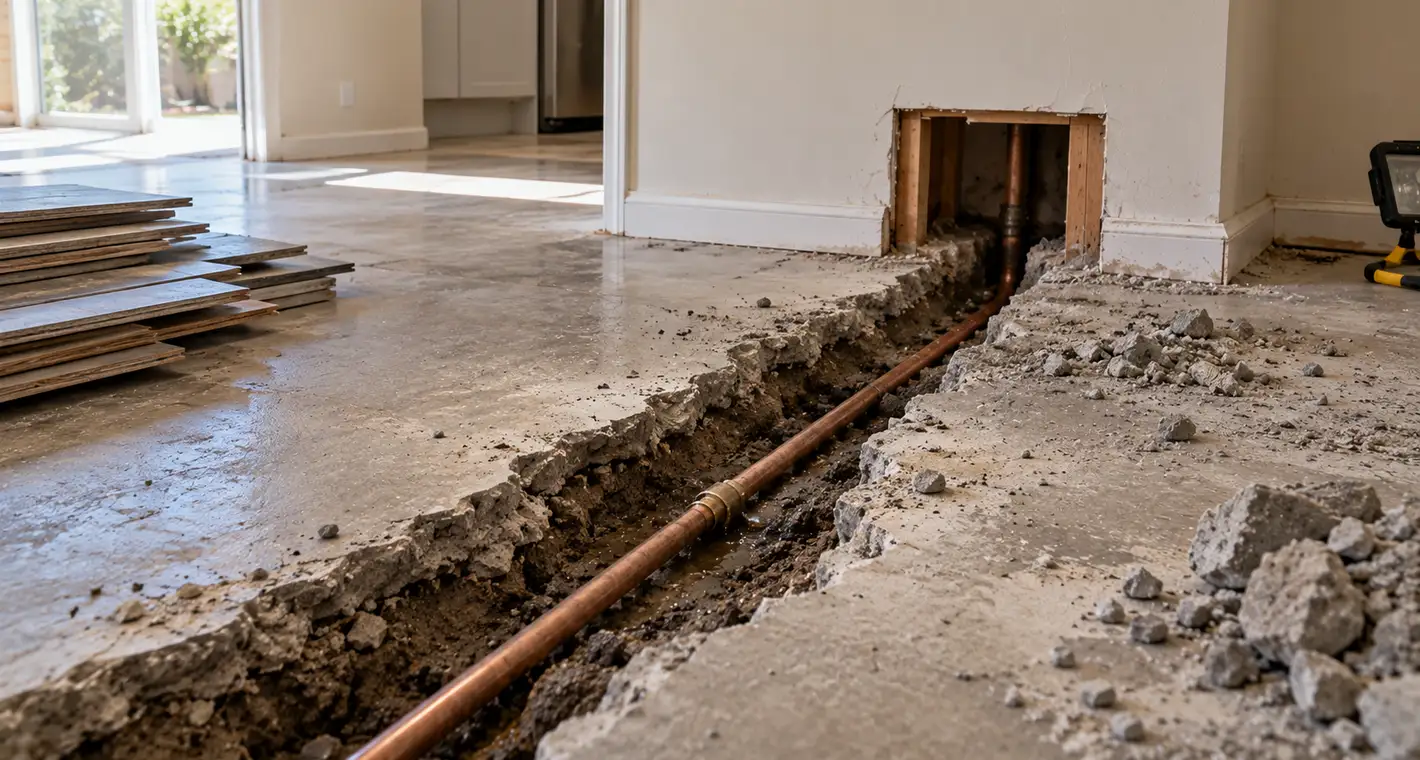
A slab leak is a failure in a pressurized supply line that runs under or inside the concrete floor. Water under the slab does not announce itself the way a burst line in a wall does, because there is no lower level for it to fall into and nothing above the floor to stain. What it does instead is push water sideways through the fill and up into the base of the walls, so the first evidence is usually a strip of carpet that will not dry near a wall with nothing wrong above it.
The confirmation is the meter. With every tap, appliance and irrigation valve in the house shut, the meter should not move. If it keeps turning, water is leaving the system somewhere with no fixture open. From there a plumber narrows it down with listening equipment, pressure isolation and thermal imaging rather than by opening concrete at guesses.
Why the copper under these floors is the pipe that fails
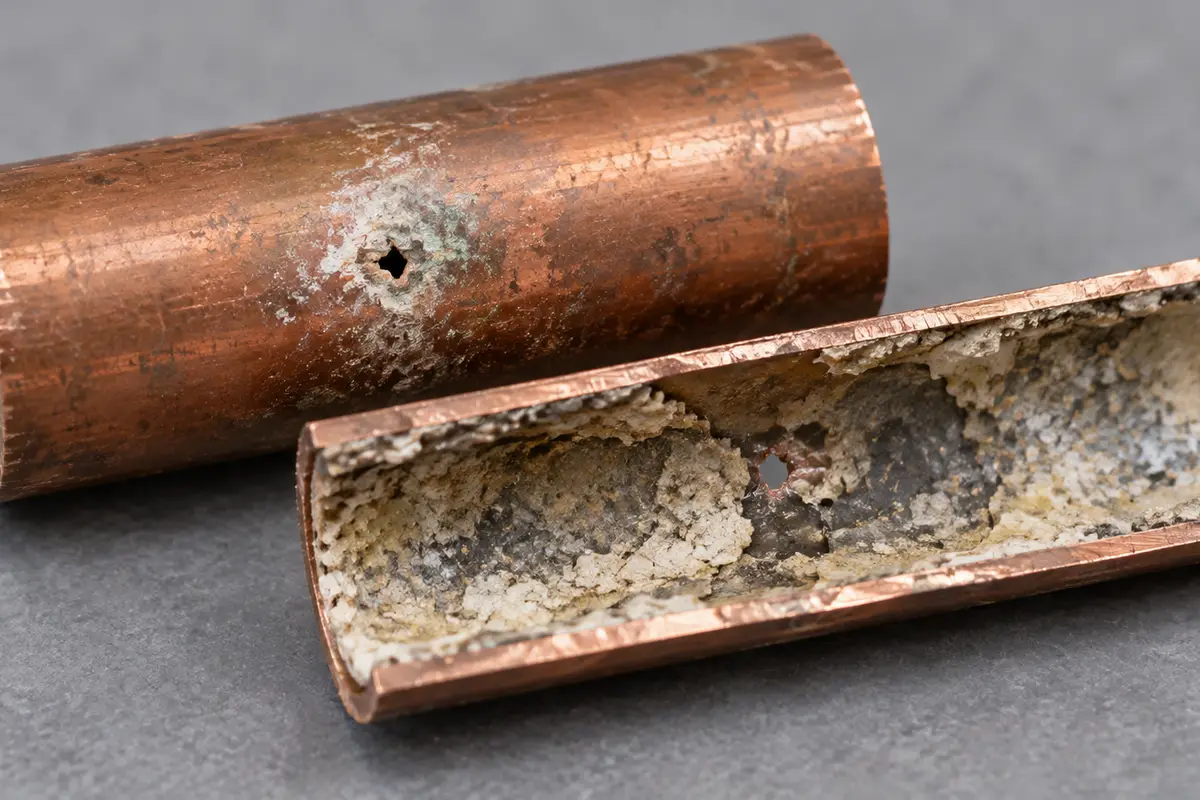
The timing is not random. Between 77 and 84 percent of the housing in every city on this list was finished before 1980, and most of it was plumbed in copper laid under the slab. Hot lines fail first, because every draw expands the pipe and moves it against the concrete or against a stone in the fill, and hot water also accelerates what is happening inside the pipe.
The water itself is a factor rather than the cause. Supply here is largely imported through the Metropolitan Water District from the Colorado River and the State Water Project, and it is hard: the Palos Verdes system reported total hardness of 234 parts per million in 2025, while the Dominguez system serving Carson averaged 126 with a range up to 300. Sixty years of mineral-heavy water changes the inside of a copper pipe, and contact with concrete and soil works on the outside at the same time.
What a plumber does and what a restoration provider does
Two separate jobs, usually running in parallel. The plumbing side locates the failure, then either repairs that section through the slab or abandons the buried run and reroutes new pipe overhead. That stops the water. It does not deal with what the water already did.
The restoration side handles that part: extracting standing water, drying the slab itself and the bottom band of the walls, taking out carpet padding and any material that has gone past drying, and treating growth if the leak ran long enough to start it. Concrete is slow to give moisture back, so readings are taken on the slab for days after the surface stops feeling wet. Where a plumber has cut the floor, the open trench also has to be dried before anything is patched over it.
The same failure behaves differently on the hill
On the plain, water from a slab leak spreads horizontally and stays inside the footprint of the house. On the peninsula the ground is not level and the foundations are different: slope lots there are generally built on drilled caissons with grade beams spanning between them and a designed void of four to six inches beneath the beam. Water reaching that gap is out of sight, and it can leave the building envelope entirely and go into the hillside, which in Rancho Palos Verdes is a matter the city regulates rather than a private inconvenience.
Slab leak water damage by city
- Slab Leak Repair CarsonZIP 90745, 90746
- Slab Leak Repair TorranceZIP 90501, 90503, 90504, 90505
- Slab Leak Repair Rancho Palos VerdesZIP 90275
- Slab Leak Repair ComptonZIP 90220, 90221, 90222
- Slab Leak Repair Manhattan BeachZIP 90266
- Slab Leak Repair Palos Verdes EstatesZIP 90274
- Slab Leak Repair West CarsonZIP 90502
- Slab Leak Repair Rolling Hills EstatesZIP 90274
- Slab Leak Repair Rolling HillsZIP 90274
Slab leak repair South Bay: common questions
- What are the first signs of a leak under the floor?
- A patch of floor that is warm underfoot, which points at the hot line. A water meter that keeps turning after every fixture in the house is shut. Water pressure that has dropped without explanation. Carpet that stays damp along one wall with no visible source above it. Any one of those on its own is worth checking; two together usually mean the pipe is under the concrete.
- Who fixes the pipe, and who deals with the damage?
- They are two trades. A licensed plumber locates and repairs or reroutes the failed line, and opens the concrete if it has to be opened. A restoration provider handles the water: extraction, drying the slab and the wall base, removing material that cannot be dried, and dealing with growth if the leak ran long enough to cause it. This site connects homeowners with the second of those.
- Why is it almost always the hot line?
- Hot water lines expand and contract with every draw. Over tens of thousands of cycles the pipe moves against the concrete around it, or against a stone in the fill beneath, and wears through its own wall from the outside. Hot water also drives the internal corrosion faster. Cold lines fail too, but a long way behind.
- How long can a slab leak run before anyone notices?
- On clay soils it usually surfaces within days as a warm or damp patch. On the sand under Manhattan Beach it can run far longer, because the water drains down and away instead of backing up into the room. The most reliable early warning anywhere in this area is the meter, not the floor.
- Does one slab leak mean the whole house needs repiping?
- Not necessarily, but a second and third within a year or two usually do. Repairing individual pinholes stops making sense once the material has reached the end of its working life, and the usual answer is to abandon the run under the slab and reroute new pipe overhead. That is a plumbing decision, and it is worth asking about after the first event rather than the third.